
Anyone who works in road construction, on a building site or in a logistics centre will be familiar with the situation: forklift trucks driving past, lorries manoeuvring, machinery in operation – and visibility isn’t always ideal. This is exactly where high-visibility clothing comes in. It ensures that you are seen straight away and can help prevent accidents at critical moments.
But what actually makes good high-visibility workwear? Which standards are important? And what should you look out for when choosing it? In this article, you’ll find out everything you need to know about high-vis workwear.
What does ‘Hi-Vis’ actually mean?
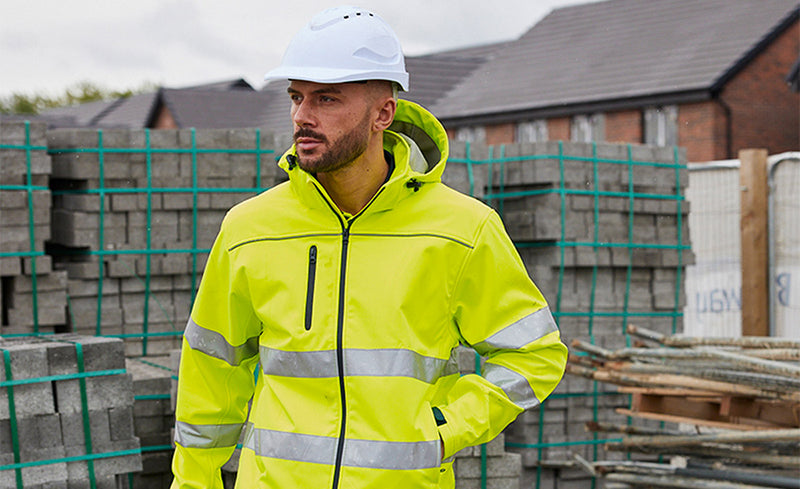
Hi-Vis stands for ‘High Visibility’. It refers to special high-visibility clothing designed to make people visible as quickly and clearly as possible, even under difficult conditions and in poor visibility.
The effect is caused by two key factors:
- Fluorescent high-visibility colours such as yellow or orange improve visibility in daylight and at dusk.
- Reflective strips reflect light sources, such as car headlights, directly back and improve visibility in the dark.
This makes you more visible, which is a key safety factor, particularly in areas with vehicle traffic or where machinery is in operation. The requirements for such clothing are set out in the EN ISO 20471 standard. It specifies which visible areas made of background material and reflective strips must be present for a garment to be classified as certified high-visibility clothing.
Who needs high-visibility clothing?
When people think of high-visibility clothing, many immediately think of roadworks or building sites. In fact, however, it is used in far more sectors than that.
Typical areas of application include:
- Building and civil engineering
- Road and transport infrastructure construction
- Logistics and warehousing
- Industry and manufacturing
- Waste management
- Rail operations, track construction and rail transport
- Airport and port logistics
- Local authority services and facilities management
- Forestry
- Emergency services and public authorities
Wherever people and vehicles work together, or where visibility is poor, high-visibility clothing is part of the standard kit.
High-visibility categories explained simply
Not all high-visibility clothing offers the same level of visibility. That is why EN ISO 20471 distinguishes between three high-visibility classes.
Class 1
The smallest visible area. Suitable for work areas with a comparatively low level of risk.
Class 2
It offers significantly greater visibility and is frequently used in logistics, industry and on building sites.
Class 3
The highest protection class. It is designed for particularly high-risk working environments and ensures maximum visibility.
As a general rule, the higher the class, the larger the visible area of high-visibility material and reflective strips. The required high-visibility class for the relevant area of work is determined and specified by the employer as part of the risk assessment.
Modern high-visibility clothing can do more than just make you stand out
Anyone who thinks of high-visibility clothing as being uncomfortable and stiff is very much mistaken. Modern high-vis workwear combines safety with comfort and functionality.
Nowadays, users rightly expect more than just visibility:
- Bewegungsfreiheit für lange Arbeitstage
- Robuste Materialien für den täglichen Einsatz
- Wetterfestigkeit bei Wind und Regen
- Atmungsaktive Stoffe für hohen Tragekomfort
- Praktische Taschenlösungen
- Passformen für Damen und Herren
High-quality collections such as BISLEY’s Hi-Vis range combine standard-compliant high-visibility clothing with hard-wearing materials and functional details for everyday work. The clothing has been specially designed to meet the requirements of industry, the trades and the construction sector.
What to look out for when buying
Before you decide on a model, there are a few things you should check:
✅ Certified to EN ISO 20471
✅ The right high-visibility class for your line of work
✅ Suitable for all weather conditions and seasons
✅ Comfortable fit and ample freedom of movement
✅ Durable materials for everyday use
✅ Practical features such as pockets, hoods or ID card pockets
Conclusion: Visibility means safety
High-visibility clothing is an essential part of personal protective equipment in many professions. It ensures that you are more easily seen during the day, in poor visibility, at dusk and in the dark, thereby significantly reducing the risk of accidents.
Modern high-visibility clothing offers far more than just eye-catching colours these days. It combines safety in line with standards with comfort, weather protection and practical features for everyday use.
Anyone who ensures they choose the right protection class, high-quality materials and relevant certifications is not only investing in comfortable workwear, but above all in their own safety.





Leave a comment
This site is protected by hCaptcha and the hCaptcha Privacy Policy and Terms of Service apply.